
Property Development Finance: What Lenders Actually Look At
A detailed technical guide to how UK development finance lenders evaluate projects: Gross Development Value (GDV), Loan to Cost (LTC), development appraisals, planning conditions, monitoring surveyors, drawdowns, and exit options.
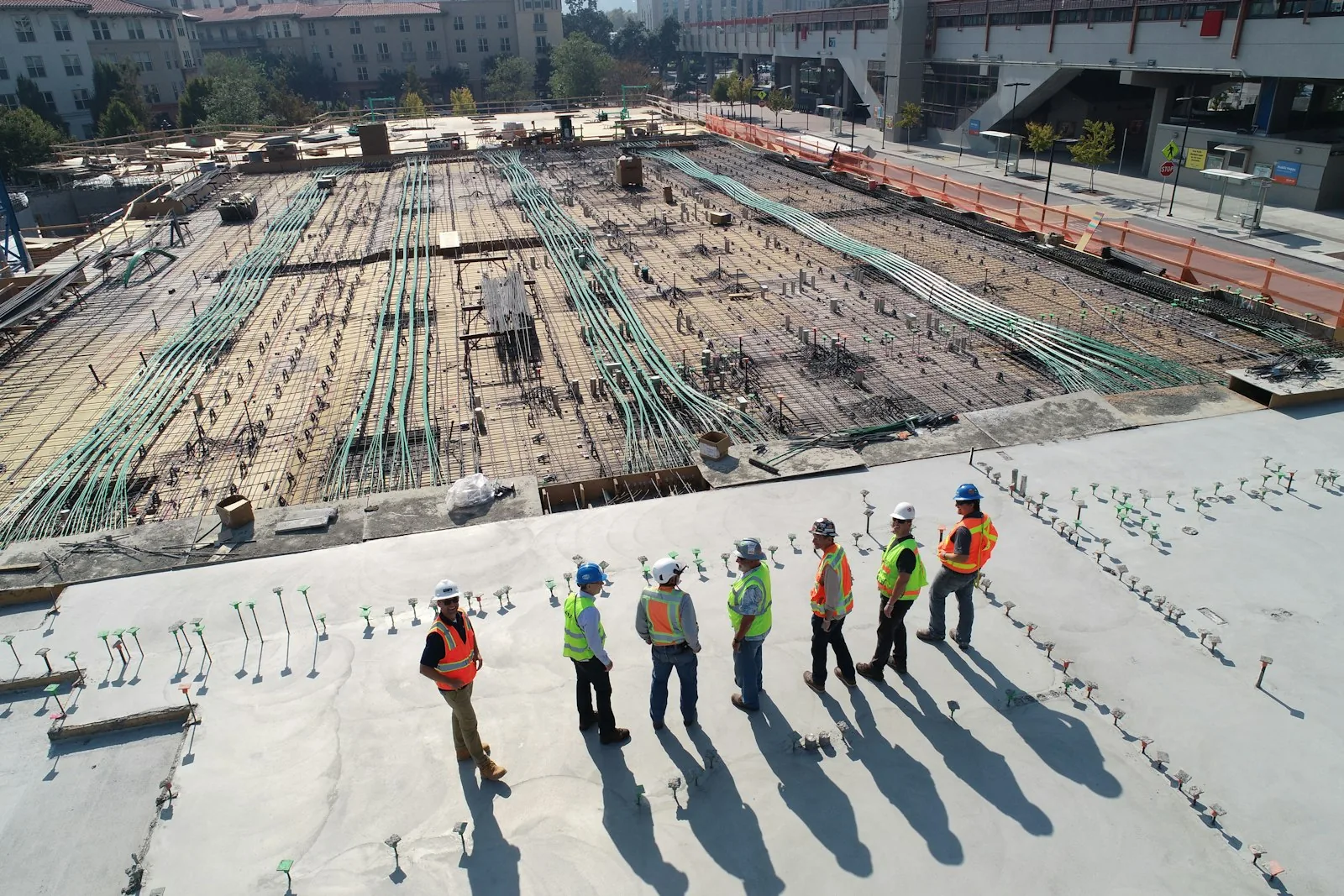
The mechanics of UK property development debt
Property development finance is a specialized, short-term debt facility designed to fund ground-up residential or commercial construction, conversion projects, or heavy structural refurbishments. Unlike standard property investment loans that rely on existing rental yields, development finance is underwritten against the future completed value of the project.
Facilities are structured to release capital in controlled stages. Initial funds cover site acquisition or existing debt refinancing, while subsequent tranches are drawn down periodically to cover construction costs as works progress on site. Understanding how lenders assess these complex projects is essential for developers seeking competitive funding packages.
The core metrics: GDV, LTC, and LTGDV explained
Development finance underwriters evaluate project risk through three core ratios that determine maximum borrowing capacity:
Gross Development Value (GDV): GDV is the estimated open-market value of the completed development, assuming all units are built to specified standards and sold or let under normal market conditions. Independent RICS Red Book valuers determine GDV by analyzing comparable local sales, price per square foot, and localized buyer demand.
Loan to Cost (LTC): LTC measures total debt as a percentage of total project costs—including land purchase, professional fees, planning costs, construction, and finance charges. Senior lenders typically fund up to 85% to 90% of total project cost, requiring the developer to provide the remaining 10% to 15% as equity.
Loan to GDV (LTGDV): LTGDV caps the total loan facility against the end value of the completed project. Market benchmarks generally cap senior development facilities at 65% to 70% LTGDV. This ensures a substantial equity buffer remains if market prices decline during construction.
Development appraisals, residual land valuation, and cost accuracy
The development appraisal is the financial blueprint of the project. Lenders scrutinize every line item within the appraisal to verify cost accuracy and profit margin resilience:
Build Costs & Bill of Quantities: Construction costs must be verified by itemized quotes or a formal Bill of Quantities. Underwriters compare proposed cost per square foot against current industry benchmarks for the relevant region and build specification.
Residual Land Valuation Formula: Valuers calculate maximum allowable site purchase price using residual valuation methodology: Residual Land Value = GDV minus (Construction Costs + Professional Fees + Statutory Fees + Contingency + Finance Charges + Target Developer Profit). If a developer overpays for land, senior debt availability is reduced.
Professional Fees & Statutory Costs: Appraisals must account for architect fees, structural engineering, planning consultant costs, Section 106 obligations, Community Infrastructure Levy (CIL) payments, and building control inspection fees.
Contingency Allowances: Lenders enforce a mandatory cost contingency—typically 5% to 10% of total construction costs. This ring-fenced reserve covers unforeseen site conditions, material price inflation, or minor design revisions without jeopardizing solvency.
Developer Profit Margins: Lenders evaluate profit on cost (typically targeting 15% to 20% minimum) and profit on GDV. A healthy profit margin acts as the primary risk buffer against cost overruns or property price drops.
The capital stack: Senior debt, stretch senior, and mezzanine finance
Complex or capital-intensive property developments often draw funding from multiple capital layers. Understanding how these layers combine within the capital stack allows developers to optimize equity contributions and overall cost of money:
Senior Debt: Senior development debt forms the foundation of most build facilities. It carries the lowest interest rates and holds first legal charge security over the land and project. Senior lenders typically fund up to 60–70% LTGDV and up to 80–85% LTC.
Stretch Senior Debt: Provided by specialist alternative debt funds, stretch senior facilities combine senior debt and a stretched leverage layer into a single facility, funding up to 75% LTGDV or 90% LTC. While pricing is higher than traditional senior bank debt, it eliminates the need for separate legal arrangements.
Mezzanine Debt: Mezzanine finance sits behind senior debt as a second legal charge, filling the gap between senior debt and developer equity. Mezzanine funding can push overall debt leverage up to 90% of total costs, though interest margins are significantly higher to reflect subordinate legal standing.
Planning permission, Section 106, and CIL statutory approvals
Unconditional planning permission is a non-negotiable prerequisite for ground-up development funding. Lenders will not release construction tranches against speculative or unapproved schemes.
Underwriters examine the exact nature of the planning consent. Full planning permission is required; outline planning consent is insufficient unless accompanied by approved reserved matters.
Section 106 Agreements and CIL Liabilities: Pre-commencement planning conditions must be satisfied before initial drawdown. Lenders inspect Section 106 agreements (such as local infrastructure contributions or affordable housing quotas), environmental surveys, drainage approvals, highways agreements (Section 278/38), and CIL liability notices to ensure no legal impediments exist to site operations.
Developer track record and professional team strength
Property development is an operational execution business. Credit committees place immense weight on the experience of the developer and the technical strength of their appointed professional team:
Developer Track Record: First-time developers face strict LTV caps unless paired with experienced joint-venture partners. Underwriters look for evidence of completed projects of similar scale, complexity, and contract value within the past three to five years.
Main Contractor Vetting: The main contractor must demonstrate financial stability, adequate public and employer liability insurance, and relevant build experience. Lenders strongly prefer fixed-price JCT (Joint Contracts Tribunal) Design and Build contracts, which protect the project against unexpected contractor price hikes.
Monitoring surveyors and staged tranche drawdowns
Development funding is not released in a lump sum. After initial site purchase funds are drawn down, construction funds are held in reserve and released in arrears via monthly drawdowns.
Initial Monitoring Report (IMR): Before completion, the lender instructs an independent RICS-registered Initial Monitoring Surveyor (IMS). The IMS visits the site, reviews contracts, planning consents, environmental reports, and project schedules, and verifies that the budget is realistic.
Monthly Drawdown Inspection: Each month, the developer submits an interim payment application. The IMS inspects completed site works, verifies stored materials, checks quality standards, and signs off a drawdown certificate authorizing the lender to release the next tranche of funds.
Development risk management: Cost overruns, delays, and sensitivity analysis
Underwriters conduct extensive stress testing—known as sensitivity analysis—on every development proposal prior to credit approval. This evaluation tests how project solvency holds up under adverse market shifts.
Build Cost Stress Testing: Underwriters model a 10% to 20% increase in construction costs to verify that developer equity and contingency reserves can absorb inflation without requiring emergency debt injections.
GDV and Market Sensitivity: Valuers and lenders model potential declines in end unit sales prices (e.g., a 10% fall in localized housing prices) alongside extended sales period assumptions (e.g., 6 to 12 months of additional holding costs). Projects that maintain positive debt coverage despite market compression are prioritized for approval.
Exit strategies: Sales cycles vs development exit refinancing
Like bridging debt, development facilities require a fully articulated, viable exit strategy before credit approval:
Open Market Sales Exit: Repayment occurs through individual unit sales. Underwriters examine local sales velocity, estate agent marketing strategies, and target buyer demographics. Lenders typically enforce a sales sweep, taking 100% of net sales proceeds from early unit completions until senior debt is fully cleared.
Development Exit Refinance: If build completion is achieved but units remain unsold or unlet, developers can execute a development exit bridge. This replaces high-cost construction debt with a lower-cost holding facility, providing additional time to execute sales without incurring default penalties.
Refinance to Retain (BTL / Commercial Mortgage): Developers building build-to-rent portfolios refinance construction facilities onto commercial investment mortgages based on rental yield and long-term DSCR metrics.
Key preparation steps for a funding application
Developers preparing a development finance package should compile a comprehensive information pack: executive summary and site overview, detailed development appraisal and cash flow forecast, RICS Red Book valuation (or site acquisition proof), full planning decision notice and drawings, JCT contractor agreement and schedule of works, developer CV detailing past completed schemes, and professional team credentials.
BusinessLending.uk acts as a commercial finance introducer, matching property developers with specialist senior debt lenders, stretch-senior providers, and mezzanine lenders. We help clarify application requirements and introduce your scheme to lenders whose criteria align with your project scale.
Explore Relevant Financing Solutions
Looking to structure finance for your business? Review key criteria and parameters for these related options: